YiTo Pack Solidifies Global Supply Chains as a Reliable High Quality Cellophane Cigar Bags Manufacturer in 2026
HUIZHOU, GUANGDONG, CHINA, July 24, 2026 /EINPresswire.com/ -- Cigar packaging procurement looks markedly different in 2026 than it did three years ago. Container slot uncertainty on transpacific lanes, ESG disclosure rules taking effect across European markets, and the steady tightening of food-contact and tobacco-adjacent material standards have collectively raised the bar for what brands expect from their packaging partners. Against this backdrop, the credentials required of a High Quality Cellophane Cigar Bags Manufacturer have expanded far beyond film quality and price competitiveness. Documentation depth, audit transparency, and the ability to scale production without losing batch consistency now sit at the center of supplier evaluation. The story of how YiTo Pack has positioned itself within this changed environment illustrates a broader shift in how specialized Chinese manufacturers approach the global cigar trade.
Why "Reliable" Carries Different Weight in 2026
Industry conversations around supplier selection have shifted in tone over the past eighteen months. Where buyers once asked about lead times and minimum order quantities first, audit-ready documentation and material traceability now tend to surface earlier in the conversation. This reordering reflects real consequences: a single missing certificate of origin can delay customs clearance by weeks, and a material composition mismatch flagged during destination-port inspection can trigger an entire shipment recall.
Three structural forces drive this change. First, post-pandemic logistics planning has made buyers acutely aware of how a single weak link disrupts an otherwise functional supply chain. Second, sustainability reporting requirements have pushed material provenance documentation from a "nice to have" into a contractual obligation. Third, retail buyers downstream are increasingly demanding shelf-ready proof of compliance, which propagates upward through brand owners to packaging suppliers.
Specialized manufacturers tend to handle these demands more fluidly than generalist trading houses. A factory focused narrowly on cellulose film packaging accumulates regulatory familiarity that gets harder to acquire when product lines sprawl across unrelated categories.
How Long-Term Export Practice Shapes Production Decisions
There is a difference between a factory that has produced cellophane cigar bags for a decade and one that began producing them last year. The difference rarely appears in product spec sheets but shows up clearly in failure-rate data, customer retention metrics, and the speed at which technical questions get answered.
YiTo Pack has built its export operation around cellulose film and biodegradable substrate packaging since its founding, with cigar bags representing a core specialty within that portfolio. Years of producing for clients in humid Caribbean markets, dry European warehouses, and temperature-variable North American distribution networks have generated practical knowledge that cannot be reverse-engineered from technical manuals.
This knowledge translates into preemptive adjustments. Workshop sealing parameters shift with seasonal humidity rather than waiting for defect reports. Ink selection accounts for ocean-transit temperature ranges before artwork approval rather than after a complaint. Carton load planning incorporates lessons from past stacking-pressure incidents. None of these adjustments appears on a quotation, yet they directly affect what arrives at the buyer's warehouse.
A geographically diverse client base reinforces this learning loop. Compliance questions raised by one regional buyer often become standard documentation practice across the entire export workflow within a single quarter.
Producing Trial Batches and Container Volumes Within One Operational Frame
Cigar brand demand patterns rarely behave predictably. A boutique brand might commission a 5,000-piece pilot run before deciding whether to commit to ongoing production. A mid-sized house may run a steady 100,000-piece monthly volume on core SKUs while occasionally ordering 8,000-piece special editions tied to anniversary releases. Larger producers often combine 500,000-piece quarterly contracts with rapid sampling cycles for new market entries.
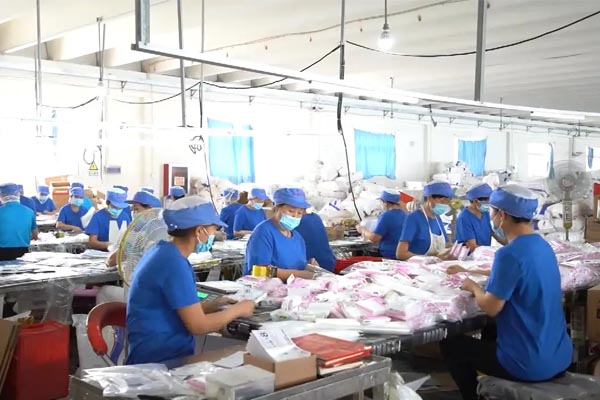
Serving all three patterns from a single facility requires deliberate workshop organization. YiTo Pack has separated its production environment into dedicated sampling lines and continuous-run lines. Sampling lines absorb the setup overhead that small batches require, while continuous-run lines maintain the throughput economics that large orders demand. The split prevents one type of order from disrupting the other.
This arrangement matters most during market turbulence. When retail demand becomes unpredictable, buyers value a partner capable of accepting a 15,000-piece urgent reorder without abandoning the schedule for a 300,000-piece existing contract. Maximum stated capacity rarely correlates with this kind of responsiveness; workflow design does.
Tracing Quality Control Through the Production Sequence
Quality control in cellophane cigar bag production unfolds as a sequence rather than a single checkpoint. Inbound cellulose and biodegradable film deliveries undergo verification against thickness specifications, transparency ratings, and moisture parameters before approval for workshop use. Material batches falling outside tolerance get held for supplier review.
Production-line inspection covers three operational variables that determine downstream performance. Print registration is sampled at defined intervals during runs to catch drift before it accumulates. Die-cut dimensions are checked against master templates per SKU. Seal strength testing follows escalating sampling frequency whenever results approach the lower acceptable threshold.
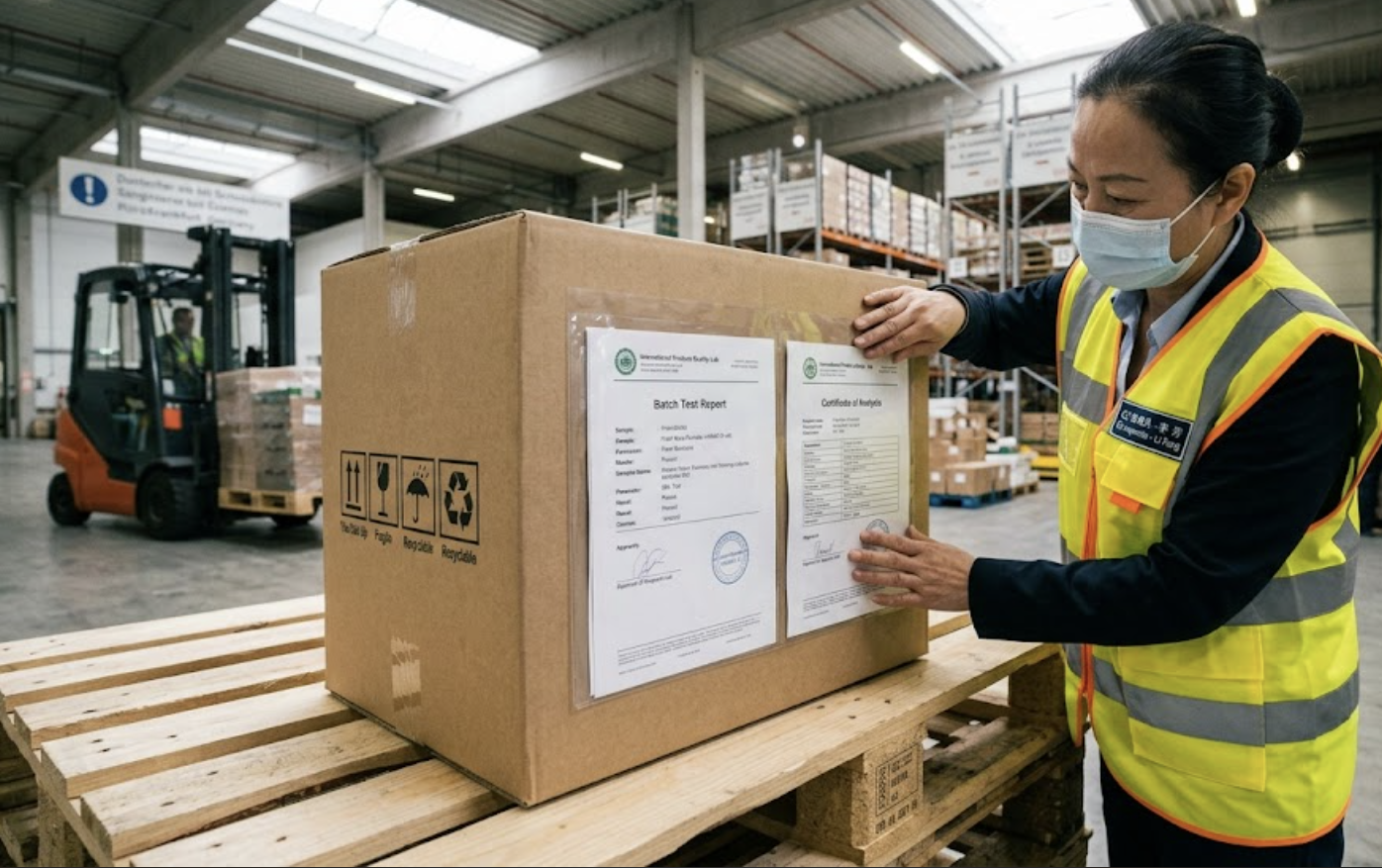
Pre-shipment AQL inspection closes the sequence, with supporting documentation traveling with the goods rather than following separately. Batch numbers, material certificates, and inspection records arrive in the same logistics package as the cartons themselves. This matters for buyers operating under audit regimes that require rapid evidence retrieval, since reconstructing documentation after the fact is significantly more expensive than receiving it upfront. The same documentation discipline applies to programs centered on sustainable substrates such as biodegradable cigar bag options, where material composition records carry particular weight under expanding sustainability reporting frameworks.
What "China Plus N" Sourcing Means for Specialized Packaging Categories
Diversified sourcing strategies have become widely adopted across the packaging trade, with the "China plus N" model emerging as a common configuration. The framework retains a primary Chinese manufacturer while adding alternative-region partners as redundancy. Yet within this model, specialized categories such as cellophane cigar bags often remain anchored in China rather than rotated across regions, because the industrial clustering that supports this product type has not been meaningfully replicated elsewhere.
What promotes a Chinese factory from backup status to primary supplier role generally comes down to three observable factors. Category specialization depth indicates whether the factory has accumulated relevant production memory. Documentation discipline reveals whether quality systems exist on paper or in practice. Audit openness signals whether the operation will withstand close inspection by demanding buyers.
The onboarding pathway between an interested buyer and a primary supplier role typically unfolds in stages. Initial sample evaluation establishes baseline product quality. An audit visit, conducted either remotely or at the Huizhou facility, validates operational claims. A pilot order tests communication and production accuracy under real conditions. A scaled annual contract closes the progression, often with quarterly review checkpoints embedded in the agreement.
The packaging trade in 2026 will likely favor manufacturers who treat reliability as an engineered outcome rather than a marketing posture. Documented processes, elastic production capacity, and accumulated cross-regional compliance experience separate strategic partners from transactional vendors. YiTo Pack continues to welcome factory audits, technical inquiries, and pilot order discussions through https://www.yitopack.com/.
Why "Reliable" Carries Different Weight in 2026
Industry conversations around supplier selection have shifted in tone over the past eighteen months. Where buyers once asked about lead times and minimum order quantities first, audit-ready documentation and material traceability now tend to surface earlier in the conversation. This reordering reflects real consequences: a single missing certificate of origin can delay customs clearance by weeks, and a material composition mismatch flagged during destination-port inspection can trigger an entire shipment recall.
Three structural forces drive this change. First, post-pandemic logistics planning has made buyers acutely aware of how a single weak link disrupts an otherwise functional supply chain. Second, sustainability reporting requirements have pushed material provenance documentation from a "nice to have" into a contractual obligation. Third, retail buyers downstream are increasingly demanding shelf-ready proof of compliance, which propagates upward through brand owners to packaging suppliers.
Specialized manufacturers tend to handle these demands more fluidly than generalist trading houses. A factory focused narrowly on cellulose film packaging accumulates regulatory familiarity that gets harder to acquire when product lines sprawl across unrelated categories.
How Long-Term Export Practice Shapes Production Decisions
There is a difference between a factory that has produced cellophane cigar bags for a decade and one that began producing them last year. The difference rarely appears in product spec sheets but shows up clearly in failure-rate data, customer retention metrics, and the speed at which technical questions get answered.
YiTo Pack has built its export operation around cellulose film and biodegradable substrate packaging since its founding, with cigar bags representing a core specialty within that portfolio. Years of producing for clients in humid Caribbean markets, dry European warehouses, and temperature-variable North American distribution networks have generated practical knowledge that cannot be reverse-engineered from technical manuals.
This knowledge translates into preemptive adjustments. Workshop sealing parameters shift with seasonal humidity rather than waiting for defect reports. Ink selection accounts for ocean-transit temperature ranges before artwork approval rather than after a complaint. Carton load planning incorporates lessons from past stacking-pressure incidents. None of these adjustments appears on a quotation, yet they directly affect what arrives at the buyer's warehouse.
A geographically diverse client base reinforces this learning loop. Compliance questions raised by one regional buyer often become standard documentation practice across the entire export workflow within a single quarter.
Producing Trial Batches and Container Volumes Within One Operational Frame
Cigar brand demand patterns rarely behave predictably. A boutique brand might commission a 5,000-piece pilot run before deciding whether to commit to ongoing production. A mid-sized house may run a steady 100,000-piece monthly volume on core SKUs while occasionally ordering 8,000-piece special editions tied to anniversary releases. Larger producers often combine 500,000-piece quarterly contracts with rapid sampling cycles for new market entries.
Serving all three patterns from a single facility requires deliberate workshop organization. YiTo Pack has separated its production environment into dedicated sampling lines and continuous-run lines. Sampling lines absorb the setup overhead that small batches require, while continuous-run lines maintain the throughput economics that large orders demand. The split prevents one type of order from disrupting the other.
This arrangement matters most during market turbulence. When retail demand becomes unpredictable, buyers value a partner capable of accepting a 15,000-piece urgent reorder without abandoning the schedule for a 300,000-piece existing contract. Maximum stated capacity rarely correlates with this kind of responsiveness; workflow design does.
Tracing Quality Control Through the Production Sequence
Quality control in cellophane cigar bag production unfolds as a sequence rather than a single checkpoint. Inbound cellulose and biodegradable film deliveries undergo verification against thickness specifications, transparency ratings, and moisture parameters before approval for workshop use. Material batches falling outside tolerance get held for supplier review.
Production-line inspection covers three operational variables that determine downstream performance. Print registration is sampled at defined intervals during runs to catch drift before it accumulates. Die-cut dimensions are checked against master templates per SKU. Seal strength testing follows escalating sampling frequency whenever results approach the lower acceptable threshold.
Pre-shipment AQL inspection closes the sequence, with supporting documentation traveling with the goods rather than following separately. Batch numbers, material certificates, and inspection records arrive in the same logistics package as the cartons themselves. This matters for buyers operating under audit regimes that require rapid evidence retrieval, since reconstructing documentation after the fact is significantly more expensive than receiving it upfront. The same documentation discipline applies to programs centered on sustainable substrates such as biodegradable cigar bag options, where material composition records carry particular weight under expanding sustainability reporting frameworks.
What "China Plus N" Sourcing Means for Specialized Packaging Categories
Diversified sourcing strategies have become widely adopted across the packaging trade, with the "China plus N" model emerging as a common configuration. The framework retains a primary Chinese manufacturer while adding alternative-region partners as redundancy. Yet within this model, specialized categories such as cellophane cigar bags often remain anchored in China rather than rotated across regions, because the industrial clustering that supports this product type has not been meaningfully replicated elsewhere.
What promotes a Chinese factory from backup status to primary supplier role generally comes down to three observable factors. Category specialization depth indicates whether the factory has accumulated relevant production memory. Documentation discipline reveals whether quality systems exist on paper or in practice. Audit openness signals whether the operation will withstand close inspection by demanding buyers.
The onboarding pathway between an interested buyer and a primary supplier role typically unfolds in stages. Initial sample evaluation establishes baseline product quality. An audit visit, conducted either remotely or at the Huizhou facility, validates operational claims. A pilot order tests communication and production accuracy under real conditions. A scaled annual contract closes the progression, often with quarterly review checkpoints embedded in the agreement.
The packaging trade in 2026 will likely favor manufacturers who treat reliability as an engineered outcome rather than a marketing posture. Documented processes, elastic production capacity, and accumulated cross-regional compliance experience separate strategic partners from transactional vendors. YiTo Pack continues to welcome factory audits, technical inquiries, and pilot order discussions through https://www.yitopack.com/.
HuiZhou YITO Packaging Co., Ltd.
+86 159 7508 6317
email us here
Visit us on social media:
LinkedIn
Instagram
Facebook
YouTube
Legal Disclaimer:
EIN Presswire provides this news content "as is" without warranty of any kind. We do not accept any responsibility or liability for the accuracy, content, images, videos, licenses, completeness, legality, or reliability of the information contained in this article. If you have any complaints or copyright issues related to this article, kindly contact the author above.